Trading in financial markets concerns how buyers and sellers exchange financial assets in pursuit of profit, risk management, or long-term investment objectives. While trading is sometimes associated with rapid speculation, it also plays structural roles in price discovery, liquidity provision, and capital allocation. Understanding how trading works requires examining market mechanisms, asset types, participants, and trading objectives.
The first component involves how market mechanisms match buyers and sellers. Financial markets rely on exchanges and over-the-counter (OTC) networks to facilitate trades. Exchanges such as stock markets operate using centralized order books where bids and offers determine transaction prices. OTC markets operate through negotiated relationships, often involving financial institutions that quote prices. Market mechanisms ensure that assets can be traded efficiently and that supply and demand determine fair value.
The second component concerns how prices are formed. Prices reflect how market participants evaluate future cash flows, interest rates, risk, and macroeconomic conditions. In highly liquid markets, price discovery is continuous, with new information incorporated almost instantly. Traders monitor economic data, corporate earnings, and geopolitical events because such information affects valuation assumptions. Price formation also reflects sentiment, herd behavior, and expectation dynamics, demonstrating that markets can be influenced by both fundamentals and psychology.
Trading involves how different asset classes behave. Markets include equities, bonds, commodities, currencies, derivatives, and digital assets, each with distinct characteristics. Equities represent corporate ownership stakes, bonds represent debt obligations, commodities represent physical goods, and currencies represent sovereign money. Derivatives such as futures and options derive value from underlying assets and allow participants to hedge or speculate on price changes. Digital assets, including cryptocurrencies, represent emerging markets with decentralized infrastructure and volatile price behavior.
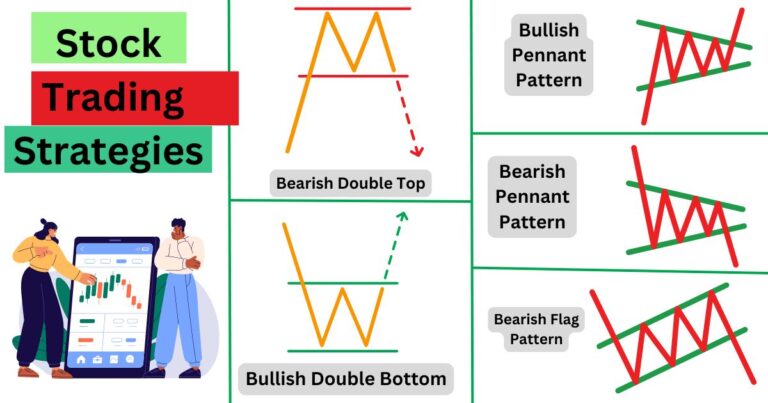
Trading strategies determine how participants seek returns. Strategies range from long-term investing to high-frequency trading. Long-term investors focus on fundamentals and hold positions for extended periods, while traders seeking short-term profits rely on technical analysis, momentum, or arbitrage. Quantitative traders use algorithms to identify statistical relationships, while market makers aim to profit from bid-ask spreads by providing liquidity. Each strategy involves different risk profiles, time horizons, and analytical techniques.
Trading also involves how technology influences execution. Electronic trading platforms automate order routing, matching, and execution. Algorithmic trading systems evaluate market conditions and place orders at high speed. Automation reduces transaction costs and increases liquidity but also raises concerns regarding market stability during periods of extreme volatility. High-frequency trading (HFT) exemplifies how technology can exploit microsecond inefficiencies. Retail platforms democratize market access by allowing individuals to trade with minimal capital and real-time pricing.
Risk management plays a central role in how trading operates. Traders must determine how much capital to allocate, how to set stop losses, and how to diversify exposures. Market volatility introduces uncertainty regarding when price changes will occur and how significant they will be. Leverage magnifies both gains and losses, requiring careful management to avoid liquidation. Professional traders use hedging techniques to offset exposures, while institutions employ portfolio-level risk frameworks such as value-at-risk (VaR) and stress testing.
Liquidity influences how trading works by affecting execution quality. Highly liquid markets allow traders to enter and exit positions quickly without significant price impact. Illiquid markets impose wider spreads and higher slippage. Liquidity varies across asset classes and changes during crisis periods. During financial stress, liquidity evaporates as market participants reduce risk, causing price dislocations and accelerating volatility.
Trading further interacts with regulatory environments. Regulators determine how markets operate, how transparency is enforced, and how misconduct is deterred. Regulations influence where trading occurs, how leverage is used, and which participants can access specific products. Market integrity depends on enforcement against insider trading, manipulation, and fraudulent practices.
In summary, trading works by matching buyers and sellers, forming prices, managing risk, and allocating capital across markets. Technology, regulation, and strategy collectively influence how trading decisions are executed. Financial markets rely on trading not only for profit opportunities but also for system-level functions that support the broader economy.